New Book: An Assyrian’s Odyssey Through War and Exile by Abdulmesih BarAbraham MSc. ― activist, writer, historian. | bio | writings
In her new book, Claire Weibel Yacoub recounts the odyssey of an Assyrian in a historical novel about exile, war, and the unbroken will of a people.
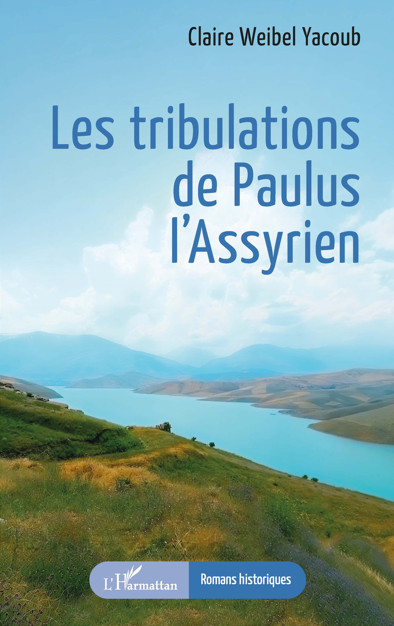
With Les tribulations de Paulus l'Assyrien (The Tribulations of Paulus the Assyrian), the French historian and specialist on the Assyro-Chaldean question, Claire Weibel Yacoub, presents a moving novel based on a true story. The book, which has just been published by L'Harmattan (ISBN 978-2-336-64526-1, €14), takes the reader from a Persian village on Lake Urmia via the Caucasus, Argentina, and France all the way to the Syrian Jazira in Mesopotamia.
At the centre stands Paulus, born in 1889 in Khosrova in northwestern Iran. The young Assyrian, deeply rooted in the ancient Mesopotamian culture, is forced to leave his homeland in 1908. His journey first takes him to Tiflis (Tbilisi), later across the oceans to Argentina. The outbreak of the First World War changes everything: he reaches France, returns to the Caucasus after the armistice — and there learns of the death of his parents in the massacres of the Assyrian genocide in 1915—1918. The hoped-for family reunion turns into a nightmare.
An unexpected turning point follows: after the collapse of the Ottoman Empire, which had fought on the side of the Central Powers (the German Empire, Austria-Hungary, and Bulgaria) and lost the war, it had to watch as its former territories were divided among the victorious powers. France becomes the mandatory power in Syria and formed the Assyro-Chaldean Battalion within the Armée du Levant. Paulus enlists and settles with his family in the Upper Jazira in Syria. Whether this place of refuge will become his new homeland is left deliberately open by the author.
The publisher's announcement succinctly captures the book's ambition: "Inspired by a true story, this account traces the tribulations of Paulus the Assyrian and, through him, those of his people who still stand upright."
About the author
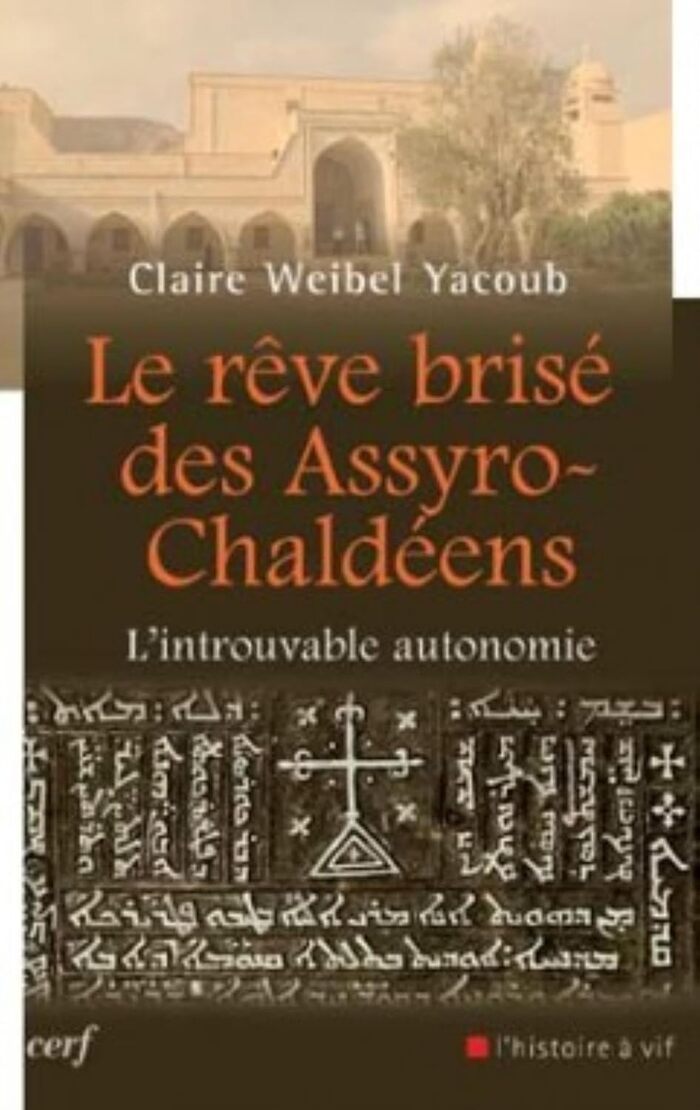
Claire Weibel Yacoub, author and co-author of several scholarly works on Assyro-Chaldean history, including Le rêve brisé des Assyro-Chaldéens (CERF, 2011), has herself visited many of the places mentioned in the book. With this historical-novelistic narrative she continues her long-standing work of making the history of the often-overlooked Assyrian people vivid and accessible — a people of unbroken resilience that continues to resist to this day despite genocide, displacement, and exile.
Auteure et co-auteure de plusieurs ouvrages sur la question assyro-chaldéenne, dont Le rêve brisé des Assyro-Chaldéens (Cerf, 2011), ayant parcouru un grand nombre des lieux cités, Claire Weibel Yacoub poursuit l'exploration de l'histoire contemporaine de ce peuple, cette fois-ci à travers un récit historique romancé.
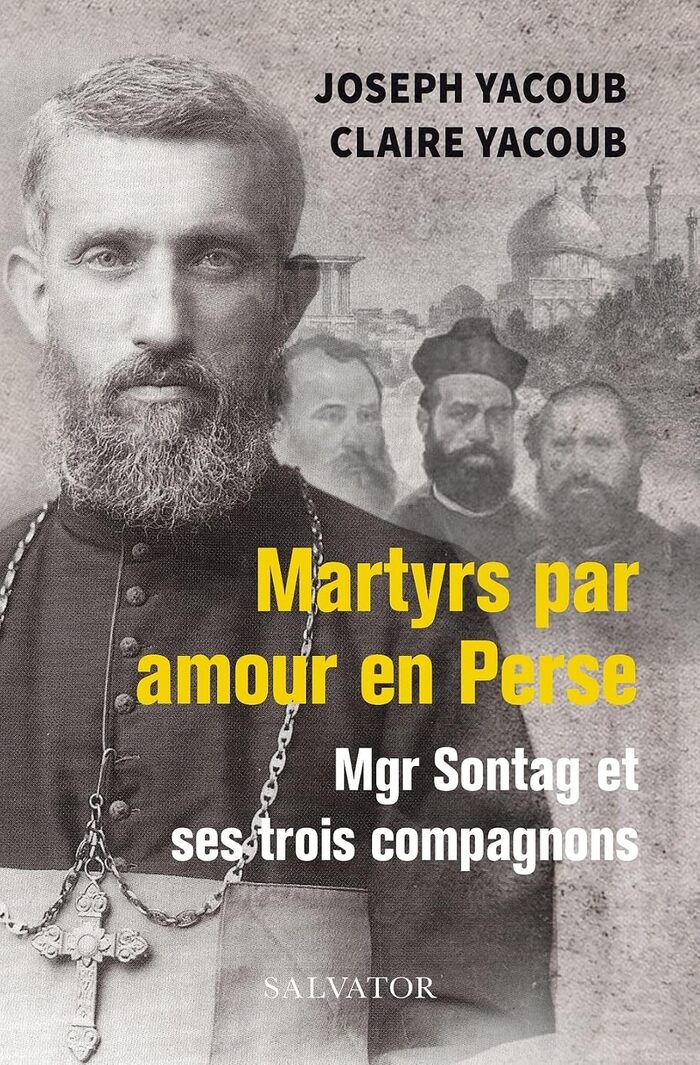
Martyrs par amour en Perse, Mgr Sontag et ses trois compagnons (French Edition)
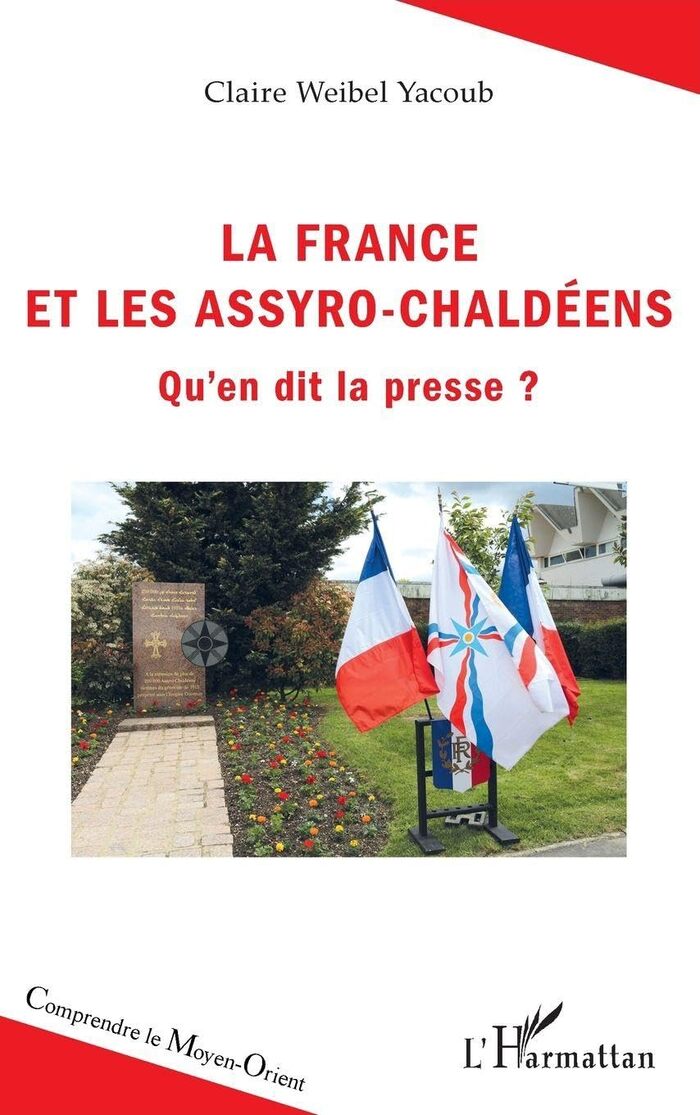
La France et les Assyro-Chaldéens: Qu'en dit la presse? (Comprendre Le Moyen-Orient, French Edition)
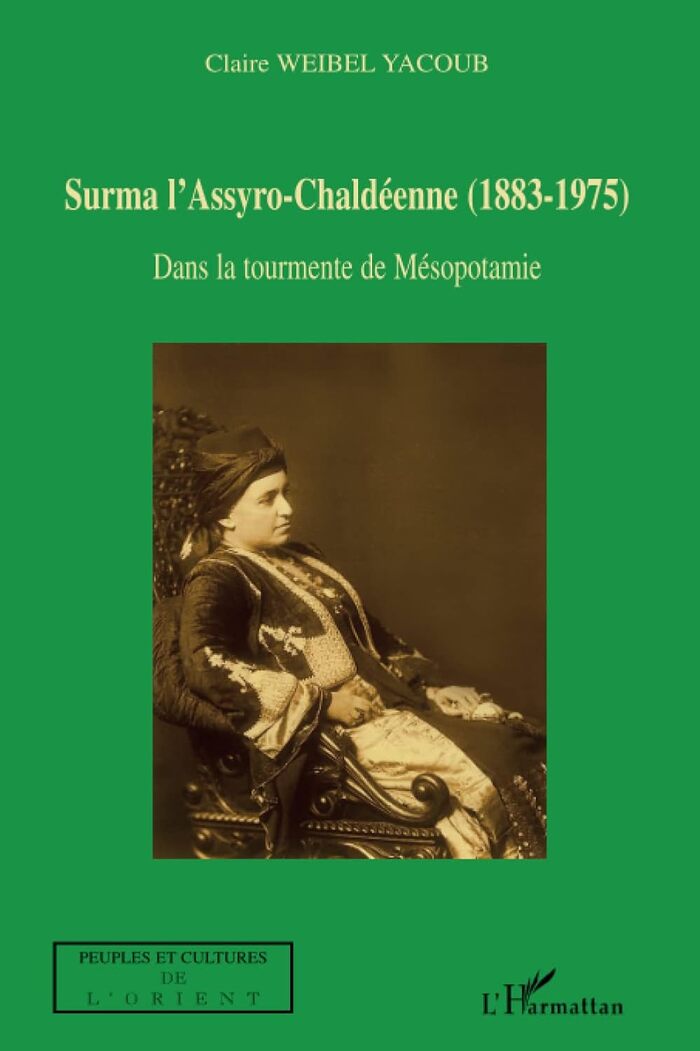
Surma l'Assyro-Chaldéenne (1883-1975): Dans la tourmente de Mésopotamie (French Edition)
Le Rêve Brisé des Assyro-Chaldéens - L'introuvable autonomie (French Edition)
Assyria
\ã-'sir-é-ä\ n (1998)
1: an ancient empire of Ashur
2: a democratic state in Bet-Nahren, Assyria (northern
Iraq, northwestern Iran, southeastern Turkey and eastern Syria.)
3:
a democratic state that fosters the social and political rights to all of
its inhabitants irrespective of their religion, race, or gender
4: a democratic state that believes in the freedom of
religion, conscience, language, education and culture in faithfulness to the
principles of the United Nations Charter —
Atour synonym
Ethnicity, Religion, Language
»
Israeli, Jewish, Hebrew
»
Assyrian, Christian, Aramaic
»
Saudi Arabian, Muslim, Arabic
Assyrian
\ã-'sir-é-an\ adj or n (1998)
1: descendants of the ancient empire of Ashur
2: the Assyrians, although representing but one single
nation as the direct heirs of the ancient Assyrian Empire, are now
doctrinally divided, inter sese, into five principle
ecclesiastically designated religious sects with their corresponding
hierarchies and distinct church governments, namely, Church of the
East, Chaldean, Maronite, Syriac Orthodox and Syriac Catholic.
These formal divisions had their origin in the 5th century of the
Christian Era. No one can coherently understand the Assyrians
as a whole until he can distinguish that which is religion or church
from that which is nation -- a matter which is particularly
difficult for the people from the western world to understand; for
in the East, by force of circumstances beyond their control,
religion has been made, from time immemorial, virtually into a
criterion of nationality.
3:
the Assyrians have been referred to as Aramaean, Aramaye, Ashuraya,
Ashureen, Ashuri, Ashuroyo, Assyrio-Chaldean, Aturaya, Chaldean,
Chaldo, ChaldoAssyrian, ChaldoAssyrio, Jacobite, Kaldany, Kaldu,
Kasdu, Malabar, Maronite, Maronaya, Nestorian, Nestornaye, Oromoye,
Suraya, Syriac, Syrian, Syriani, Suryoye, Suryoyo and Telkeffee. —
Assyrianism verb
Aramaic
\ar-é-'máik\
n (1998)
1: a Semitic language which became the lingua franca of
the Middle East during the ancient Assyrian empire.
2: has been referred to as Neo-Aramaic, Neo-Syriac, Classical
Syriac, Syriac, Suryoyo, Swadaya and Turoyo.