Biga
   
Member:
Posts: 193
Member Feedback |
Jan-07-2002 at 04:37 AM (UTC+3 Nineveh, Assyria) |
Hello dear friends, I'm corious what is your opinion, Eshoo has brothers or He has only cousins in the Bible? I noticed that the word brother, 0x0d stays in the critical verses. From the root of this word can we get the word Yhwnyx0 - "cousin, kinsman, kinswoman" words what is generally translated as "kinsman". My question is, what says the Pesitta? What is the viewpoint of the CoE? If I'm right, the Roman Catholic Church states "cousins", but the modern christian churches says "brothers". cheers,
Gabor
| |
|
Print Top | | |
|
- RE: Brothers of Eshoo,
Paul Younan
 , Jan-11-2002 at 10:29 AM, (1) , Jan-11-2002 at 10:29 AM, (1)
- RE: Brothers of Eshoo,
Biga, Jan-11-2002 at 05:23 PM, (2)
- RE: Brothers of Eshoo,
Paul Younan, Jan-16-2002 at 10:15 AM, (3)
- RE: Brothers of Eshoo,
rdf, Feb-03-2002 at 11:36 PM, (4)
- RE: Brothers of Eshoo,
Paul Younan, Feb-04-2002 at 09:38 PM, (5)
- RE: Brothers of Eshoo,
rdf, Feb-09-2002 at 07:55 AM, (6)
- RE: Brothers of Eshoo,
Paul Younan, Feb-09-2002 at 08:17 AM, (7)
- RE: Brothers of Eshoo,
rdf, Feb-10-2002 at 09:40 AM, (8)
- RE: Brothers of Eshoo,
Paul Younan, Feb-10-2002 at 10:10 PM, (9)
- RE: Brothers of Eshoo,
rdf, Feb-11-2002 at 09:15 AM, (10)
- RE: Brothers of Eshoo,
Biga, Feb-11-2002 at 09:15 AM, (11)
- RE: Brothers of Eshoo,
Paul Younan, Feb-11-2002 at 10:25 AM, (12)
- RE: Brothers of Eshoo,
Biga, Feb-11-2002 at 05:13 PM, (13)
- RE: Brothers of Eshoo,
Paul Younan, Feb-11-2002 at 05:45 PM, (14)
- RE: Brothers of Eshoo,
rdf, Mar-03-2002 at 05:22 PM, (15)
|
Paul Younan
Member: Jun-1-2000
Posts: 1,306
Member Feedback |
Jan-11-2002 at 10:29 AM (UTC+3 Nineveh, Assyria) |
In reply to message #0
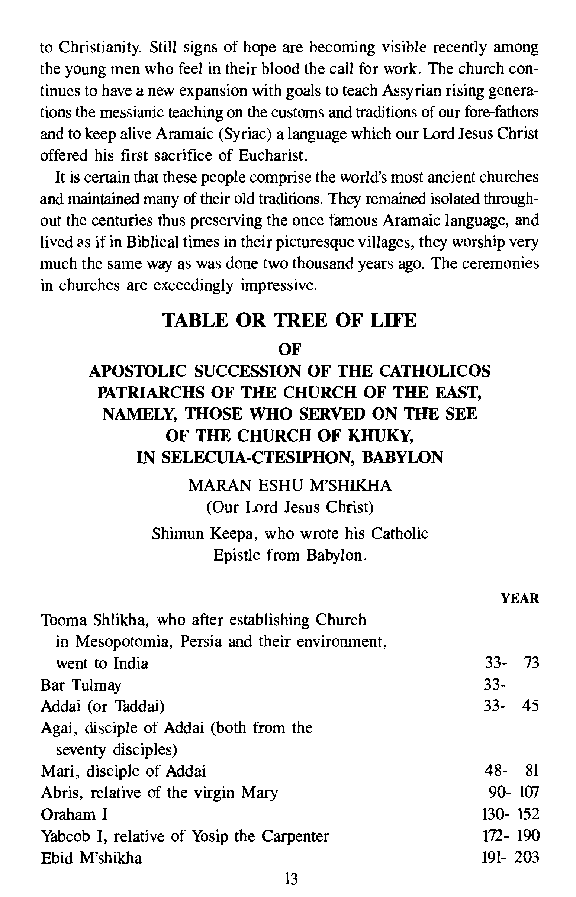
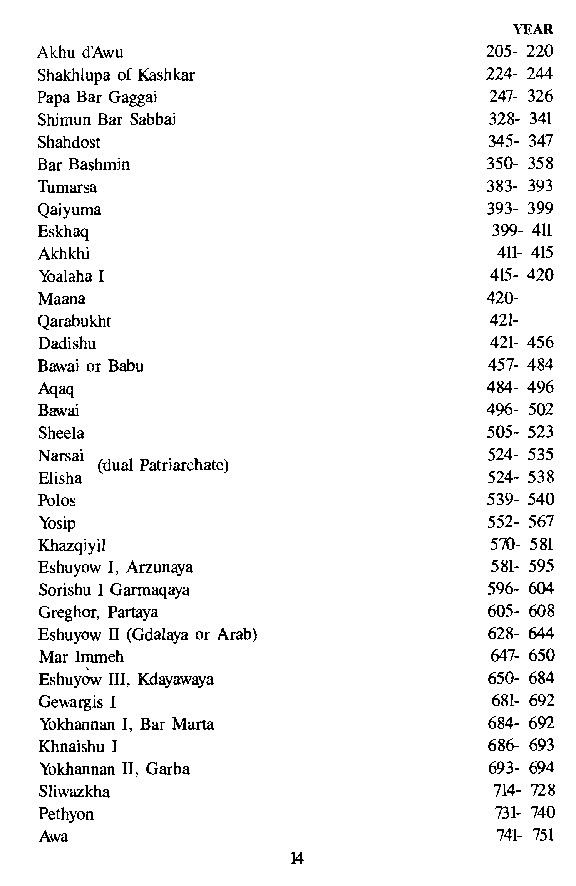
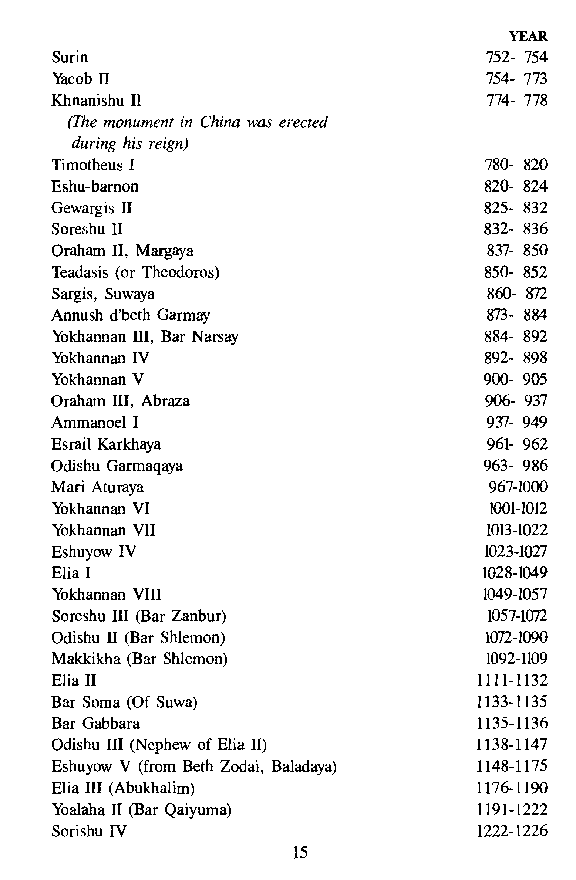
Shlama Akhi Gabor, According to CoE tradition (the CoE had 2 Patriarchs who were relatives of Mary and Joseph), Joseph was an old man when he married Mary and had children from a previous marriage, his first wife had died. These were Eshoa's brothers in the sense of being Joseph's sons. Hope this helps! Fk^rwbw 0ml4

Peshitta.org
| |
|
Print Top | | |
|
Biga
Member:
Posts: 193
Member Feedback |
Jan-11-2002 at 05:23 PM (UTC+3 Nineveh, Assyria) |
In reply to message #1
Dear Akhi Paul, I'm never heard of it. (Not surprising  Where I can read about this tradition? Where I can read about this tradition? cheers,
Gabor
| |
|
Print Top | | |
|
Paul Younan
Member: Jun-1-2000
Posts: 1,306
Member Feedback |
Jan-16-2002 at 10:15 AM (UTC+3 Nineveh, Assyria) |
In reply to message #2
Shlama Akhi Gabor, It is mentioned in many ancient writings of the Fathers, but the Aramaic ones are not printed or translated into English. One source you can read on the internet about it is in the "Protoevangelium of James" (A.D. 125) The text can be found here:
https://www.newadvent.org/fathers/0847.htm Hope this helps! Fk^rwbw 0ml4
Peshitta.org
| |
|
Print Top | | |
|
rdf
Member:
Member Feedback |
Feb-03-2002 at 11:36 PM (UTC+3 Nineveh, Assyria) |
In reply to message #3
Shlama Akhi Younan, I am interested on this topic so I run here.
I have a few questions as follows: 1. When I read in the archive here you ever said that there is a book which told that the CoE had two Patriarchs who relatives of Mary and Joseph. If you won't mind would you scan it/write it of the page of that book here or send it to my email? 2. Could you scan it the page which told that Joseph was an old man when....(but in the Aramaic).
>According to CoE tradition (the CoE had 2 >Patriarchs who were relatives of Mary and >Joseph), Joseph was an old man when he married >Mary and had children from a previous marriage, >his first wife had died.
>It is mentioned in many ancient
>writings of the Fathers, but
>the Aramaic ones are not
>printed or translated into English.
> One source you can
>read on the internet about
>it is in the "Protoevangelium
>of James" (A.D. 125) The
>text can be found here:
>
>https://www.newadvent.org/fathers/0847.htm
Thank you in advance.
Rudolf
| |
|
Print Top | | |
|
Paul Younan
Member: Jun-1-2000
Posts: 1,306
Member Feedback |
Feb-04-2002 at 09:38 PM (UTC+3 Nineveh, Assyria) |
In reply to message #4
Shlama Akhi Rudolf, >1. When I read in the
>archive here you ever said
>that there is a book
>which told that the CoE
>had two Patriarchs who relatives
>of Mary and Joseph. If
>you won't mind would you
>scan it/write it of the
>page of that book here
>or send it to my
>email? Sure - I'll scan it in and place it in a subsequent post. >
>2. Could you scan it the
>page which told that Joseph
>was an old man when....(but
>in the Aramaic).
> I don't have this book and to my knowledge it's not in print - but I will inquire of Dr. George Kiraz or Dr. Abdul-Massih Saadi if they have a copy or microfilm of the manuscript. If I find it I will post it here.
Fk^rwbw 0ml4
Peshitta.org
| |
|
Print Top | | |
|
rdf
Member:
Member Feedback |
Feb-09-2002 at 07:55 AM (UTC+3 Nineveh, Assyria) |
In reply to message #5
Shlama Dr. Younan,
>
>>1. When I read in the
>>archive here you ever said
>>that there is a book
>>which told that the CoE
>>had two Patriarchs who relatives
>>of Mary and Joseph. If
>>you won't mind would you
>>scan it/write it of the
>>page of that book here
>>or send it to my
>>email?
>
>Sure - I'll scan it in
>and place it in a
>subsequent post.
>
>>
>>2. Could you scan it the
>>page which told that Joseph
>>was an old man when....(but
>>in the Aramaic).
>>
>
>I don't have this book and
>to my knowledge it's not
>in print - but I
>will inquire of Dr. George
>Kiraz or Dr. Abdul-Massih Saadi
>if they have a copy
>or microfilm of the manuscript.
> If I find it
>I will post it here.
Thank you for the information.
B'MeshiHo, Rudolf
| |
|
Print Top | | |
|
rdf
Member:
Member Feedback |
Feb-10-2002 at 09:40 AM (UTC+3 Nineveh, Assyria) |
In reply to message #7
Shlama Akhi Paul,
>Please call me Paul - the
>title "Dr. Younan" is not
>proper - since I do
>not have a doctorate.
Yes I'll remember that
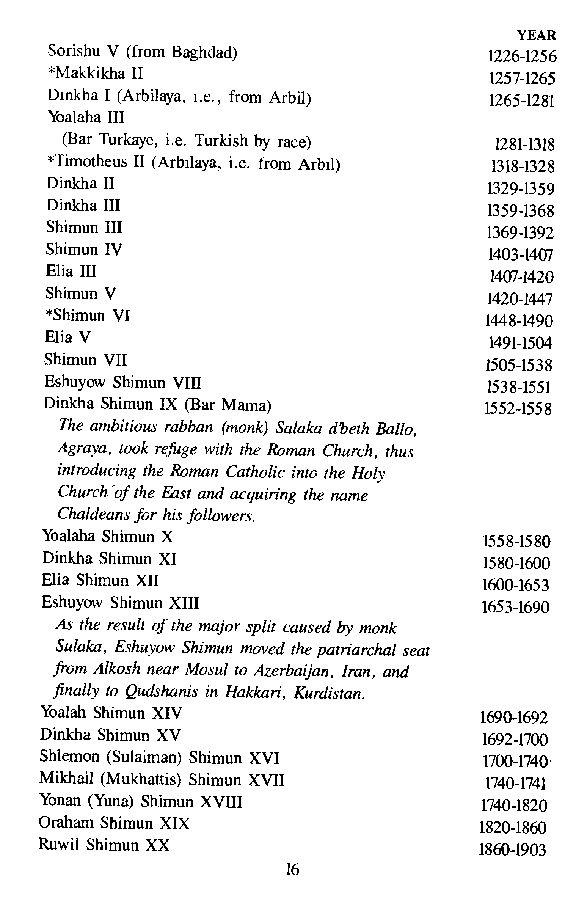
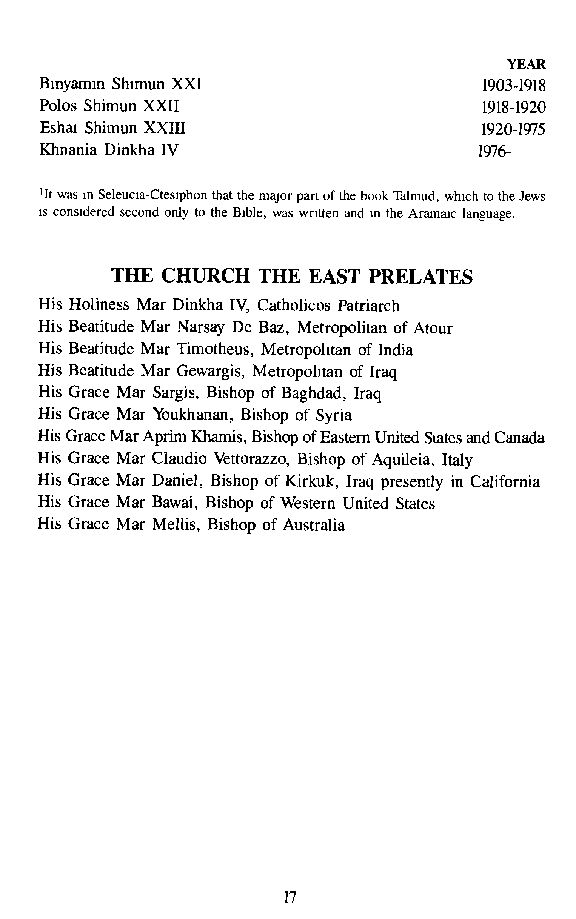
About The Apostolic Succesion of The CoE,
Is Tooma Shlikha same person with Bar Tulmay?
and why there is no exactly years of Aggai (disicple of Addai)?
Thank you for all. Rudolf
| |
|
Print Top | | |
|
Paul Younan
Member: Jun-1-2000
Posts: 1,306
Member Feedback |
Feb-10-2002 at 10:10 PM (UTC+3 Nineveh, Assyria) |
In reply to message #8
Shlama Akhi Rudolf, >Is Tooma Shlikha same person with
>Bar Tulmay? Tooma Shlikha means "Thomas the Apostles." No "doubting Thomas" jokes here, ok?  >and why there is no exactly
>years of Aggai (disicple of
>Addai)? Aggai (Aggaeus in Greek) and Addai (Thaddeus in Greek) travelled together throughout Northern Mesopotamia (Assyria) and preached the Gospel there - so they are listed together in that succession list. Shimon Keepa (Peter in Greek) is listed above all the others because of his involvement with the church in Seleucia-Ctestiphon (Babylon). Later in history this bishopric (of Babylon) and church (the church of Khuky (meaning "huts") in Babylon) became the seat of the Patriarchate of the East.
Fk^rwbw 0ml4
Peshitta.org
| |
|
Print Top | | |
|
rdf
Member:
Member Feedback |
Feb-11-2002 at 09:15 AM (UTC+3 Nineveh, Assyria) |
In reply to message #9
Shlama Akhi Paul,
>>Is Tooma Shlikha same person with
>>Bar Tulmay?
>
>Tooma Shlikha means "Thomas the Apostles."
> No "doubting Thomas" jokes
>here, ok?
>
>>and why there is no exactly
>>years of Aggai (disicple of
>>Addai)?
>
>Aggai (Aggaeus in Greek) and Addai
>(Thaddeus in Greek) travelled together
>throughout Northern Mesopotamia (Assyria) and
>preached the Gospel there -
>so they are listed together
>in that succession list.
>
>Shimon Keepa (Peter in Greek) is
>listed above all the others
>because of his involvement with
>the church in Seleucia-Ctestiphon (Babylon).
> Later in history this
>bishopric (of Babylon) and church
>(the church of Khuky (meaning
>"huts") in Babylon) became the
>seat of the Patriarchate of
>the East.
Thank you for all information.
Rudolf
| |
|
Print Top | | |
|
Biga
Member:
Posts: 193
Member Feedback |
Feb-11-2002 at 09:15 AM (UTC+3 Nineveh, Assyria) |
In reply to message #9
Dear Akhi Paul, the name Seleucia-Ctestiphon is the another name of Babylon, or it is a city in the province? It is very interesting because the most christian claims Rome equals Babylon after this verse: 1Pe. 5.13
The church that is at Babylon, elected together with you, saluteth you; and so doth Marcus my son. If your tradition is true (no doubts for me), this argument is no more crucial, because "at Babylon" mean Seleucia/Ctestiphon, a real place! cheers,
Gabor
| |
|
Print Top | | |
|
Paul Younan
Member: Jun-1-2000
Posts: 1,306
Member Feedback |
Feb-11-2002 at 10:25 AM (UTC+3 Nineveh, Assyria) |
In reply to message #11
Shlama Akhi Gabor, Seleucia-Ctestiphon was the capitol of the Parthian Empire and later the Persian Empire - the Parthians had renamed Babylon to this name but the Semites continued to call it "Babylon." Babylon was a very real place at that time - it was the capitol of the Persian empire! Fk^rwbw 0ml4
Peshitta.org
| |
|
Print Top | | |
|
Biga
Member:
Posts: 193
Member Feedback |
Feb-11-2002 at 05:13 PM (UTC+3 Nineveh, Assyria) |
In reply to message #12
Thanks, Paul! I found it also on another place: https://www.easterncatholicchurch.org/metropolitan/ Through the power of the Holy Spirit, the Church began to grown and to flourish. Traveling from Edessa, the Apostle Saint Thomas preached the Gospel in Seleucia-Ctestiphon, the capitol of the Parthian Empire and later the Persian Empire. In about 52 A.D., Saint Thomas the Apostle reached India and established the Church there as well. The disciples of Saint Thomas and their spiritual descendants eventually brought the Christian Faith and Church into China, Burma, Tibet, Korea, and Japan. Throughout its long history, the Church has remained orthodox and patriarchal (form of worship, ecclesiastical form of government, etc.) not Papal (under the jurisdiction of the Roman Catholic Church or the Patriarchate of the West in Rome. This jurisdiction remains autocephalous (self-governing) to this day. it was a "smoking gun" for me :c
| |
|
Print Top | | |
|
Paul Younan
Member: Jun-1-2000
Posts: 1,306
Member Feedback |
Feb-11-2002 at 05:45 PM (UTC+3 Nineveh, Assyria) |
In reply to message #13
» Last edited by Paul Younan on Feb-11-2002 at 05:47 PM (CT) Shlama Akhi Gabor, At that time the largest population of Jews outside of Israel was in Babylon - in fact the greatest works of Judaism outside of the Tanakh were composed by Babylonian Jewry - like the Babylonian Talmud and other writings. Since Shimon was the Apostle to the Circumcized - of course he would pay a visit to the largest community of Jews outside of Israel - of course there would have been a church in Babylon about which he wrote in his epistle! By the way - the reason why the church was called "Khuky" - "Khuky" means "huts" and the Jews who lived in Babylon were segregated in a "ghetto" while everyone else there lived a nice lifestyle with beautiful homes. The Jews were banished to live in a marshy area with reed huts as their dwellings. These Jews were visited by Shimon Keepa and he preached to them. This church still exists today - in modern-day Iraq the area is called "Salman Park" which used to be "Babylon" or "Seleucia-Ctestiphon." In the year 2000, our Patriarch and many bishops made a visit to this ancient site of this ancient church of "Khuky" (the seat of our Patriarchate.) I will try to get some pictures of the impressive ceremony that was held there to mark the millenium celebration. Fk^rwbw 0ml4
Peshitta.org
| |
|
Print Top | | |
|
Paul Younan
Member: Jun-1-2000
Posts: 1,306
Member Feedback |
Mar-04-2002 at 09:49 PM (UTC+3 Nineveh, Assyria) |
In reply to message #15
Shlama Akhi Rudolf, I've seen some calligraphy in the CoE but not necessarily of the lists of succession. This is beautiful. I did receive your email about the VCD - please forgive me but I haven't had time to make it yet. As soon as I do I'll send it to you. Fk^rwbw 0ml4
Peshitta.org
| |
|
Print Top | | |
|
rdf
Member:
Member Feedback |
Mar-06-2002 at 05:21 PM (UTC+3 Nineveh, Assyria) |
In reply to message #16
Shlama Akhi Paul,
Ok, Thank you for all delivery.
Regards, Rudolf
>I've seen some calligraphy in the
>CoE but not necessarily of
>the lists of succession.
>This is beautiful.
>
>I did receive your email about
>the VCD - please forgive
>me but I haven't had
>time to make it yet.
> As soon as I
>do I'll send it to
>you.
>
>Fk^rwbw 0ml4
>
> Peshitta.org
| |
|
Print Top | | |
|
|